Senior Academic – Years 7 to 11

The move to Senior School can be both exciting and daunting. At the heart of a smooth and successful transition is ensuring a child feels confident, secure and happy in their new environment and alongside those whom they learn each day. In every child we aim to develop a spirit of curiosity, a sense of self worth and the highest standards of behaviour, whilst supporting them in fulfilling their potential.

As well as a strong emphasis on the core subjects of English, Mathematics and Science we consider languages to be important, and so offer French and Spanish within our core timetable. Creativity abounds in our Art, Music and Drama programmes, and History and Geography lessons teach pupils about our world, both past and present.

Computing offers exciting possibilities to understand and control new technologies. Physical Education and Games encourage health and fitness, as well as providing opportunities to acquire and develop skills and attitudes to individual endeavour and teamwork. Add to the mix the moral and ethical dimensions discussed in PSHE and Religious Education and you have an academic programme that is broad and balanced, enjoyable and intellectually demanding. In Year 9, Business and Electronics are introduced to ensure that pupils experience all of our GCSE subjects before choosing which subjects they wish to study further. EAL is offered as a specialist subject throughout Senior School.

Detailed and accurate tracking and monitoring is underpinned by our use of the Cambridge CEM assessments programme, with pupils taking MIDYIS tests in year 7, YELLIS tests in Year 10 and ALIS tests in year 12. These tests measure developed ability – students’ underlying learning potential – rather than achievement based on the curriculum, and so form an excellent way to identify the learning profile of the pupil. Based on this, and our own knowledge of the pupil, we can produce strategies to build on strengths and target areas that may need extra support.

Our aim is to ensure that every pupil fulfils his or her academic potential, and so academic progress is measured and tracked by regular progress checks, the results of which are reported to parents.

Art & Design

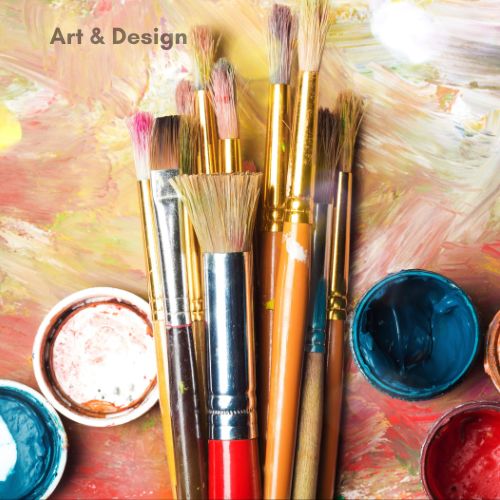
Paint brushes and paint pots
Art & Design

The Art Department at Tettenhall College is a rich and diverse place, delivering a wide range of practical activities which encourage students to follow their creative talents and broaden their knowledge and understanding of Art and Design. Achieving a qualification in Art and Design would allow any student the opportunity to progress onto a university or apprenticeship course, or even directly into the workplace. Art and Design can lead to a broad range of specialisms, including architecture, game design, graphic design, product design, engineering, interior design, fashion and costume, transport, photography work, sustainable art and museum or conservation work.

Year 7 – 9 Curriculum Outline

Our focus in Year 7 is to embed core skills focusing around the formal elements. As we move further up the school, the skills instilled in Year 7 become the foundation that we use to build upon, encouraging experimentation and developing creative independence. Students will access a wide variety of materials, techniques and processes. Students enjoy working with clay, as we have onsite kiln facilities, along with textiles, print and the more traditional drawing and painting. We also undertake some digital art classes though the use of Photoshop. To fully embrace each discipline; themed projects are pursued, each usually lasting a term.

GCSE Curriculum Outline

GCSE Year 10 & 11 Art & Design (AQA)

This is a broad course exploring practical and critical/contextual work through a range of 2D and/or 3D processes and new media and technologies. It is an unendorsed course where candidates can work in appropriate art, craft and design materials and processes.

How is the course structured?

Unit 1: Portfolio of Work – Coursework 60%

Students produce a portfolio of work based on a theme decided by their teacher. They explore this topic through a wide range of different techniques and processes, including drawing, painting, printmaking, textiles, photography and ceramics. Students must also explore the work of artist, designers and craftspeople and include this research within the portfolio.

Work selected for the portfolio should be presented in an appropriate format and could include: mounted studies, sketchbooks, visual diaries, journals, design sheets, design proposals, models, maquettes, prototypes, storyboards, video, photographic or digital presentations, records of transient and site-specific installations.

Unit 2 : Externally Set Assignment 40%

Unit 2 is an externally set assignment that will consist of 30 hours supervised preparation, followed by a 10-hour timed exam in which a final piece is produced, and worth 40%. The theme for this project is set by AQA.

The department is very well supervised and has an open door policy. After hours pupils are always given lots of extra time and support, the facilities are very well used during lunch breaks and after school. We also take the students out on trips and visits to galleries and museums. When possible we have artist come into school to conduct workshops. We actively take part in competitions and have a good record of success in this area.

Enrichment Opportunities / Field Trips 

The department is very well supervised and has an open door policy. After hours pupils are always given lots of extra time and support, the facilities are very well used during lunch breaks and after school. We also take the students out on trips and visits to galleries and museums. When possible we have artist come into school to conduct workshops. We actively take part in competitions and have a good record of success in this area.

Business

Table with a laptop and piece of paper on it illustrating graphs
Business

Business is an excellent subject to study as a foundation for a range of careers. Most careers will include coverage of human resource management, financial control, marketing and operations and, as these are the fundamentals for business study, it is a truly worthwhile subject to study. You will develop a range of transferable skills including communication (presenting ideas) and written work, teamwork, research skills, IT skills, as well as the more academic skills of analysis and evaluating.

Typically, a pupil may be asked to evaluate a range of options or strategies open to a business and they will need to weigh up the advantages and disadvantages for each option to arrive at a justified decision or judgement. These are all invaluable life skills.

Studying business may lead into a range of careers including marketing, media and/or advertising, banking/merchant banking, accountancy/auditing, human resource management/recruitment, economist in private or public sector, land management, law, stockbroking, corporate public relations and even teaching!

GCSE Curriculum Outline

In Year 10, pupils will learn:

  • Role of business and business planning
  • Business aims and objectives
  • Business ownership
  • Stakeholders
  • Business growth
  • Human resource management
  • Marketing
  • Revenue, costs, profit and loss

In Year 11, pupils will learn:

  • Sales process and customer service
  • Consumer Law
  • Business location
  • Working with suppliers
  • Ethical and environmental considerations
  • Economic climate
  • Interdependence of business
  • Sources of finance
  • Revenue, costs, profit and loss
  • Break-even
  • Cash and cash flow
  • Globalisation
  • External assessment of the GCSE is by two papers as follows:

Business 1 – Business activity, marketing and people

Business 2 – Operations, finance and influences on business

Enrichment Opportunities / Field Trips

The department runs a Sixth Form trip to New York on a biannual basis. These trips have appealed to both business and economics students who have gained from seeing how businesses and economies operate in reality.

Key Stage 4 trips to Chester Zoo ( for marketing and human resource management) and Jaguar Land Rover in Solihull to view the production facilities.

Computer Science

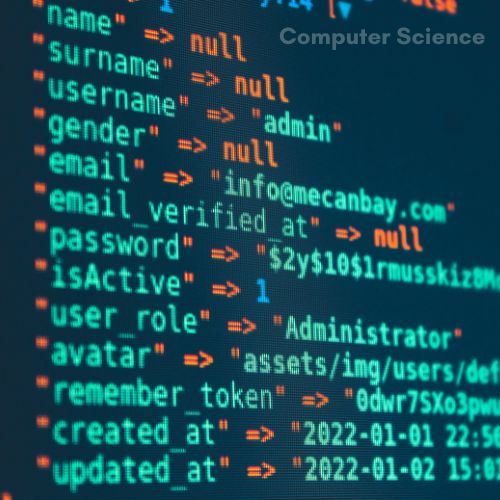
Coding on screen
Computer Science

Computer Science is an engaging and practical subject that encourages creativity and problem solving skills. It enables pupils to develop their understanding and application of the core concepts in computing. Pupils will learn how to analyse problems in computational terms and devise creative solutions by designing, writing, testing and evaluating programs.

Year 7 – 9 Curriculum Outline

All pupils study Computer Science at Key Stage 3, where they develop both their technical skills and their understanding of how technology shapes the modern world. Throughout Years 7–9, pupils build strong foundations in digital literacy, online safety and the ethical issues surrounding computing, alongside developing their computational thinking and programming skills.

In Year 7, pupils focus on becoming responsible and effective digital citizens. They explore how to collaborate safely and respectfully online, understand the impact of cyberbullying, and strengthen their digital literacy skills. They are introduced to programming through Scratch, where they design and create interactive projects that develop problem-solving, creativity and logical thinking.

In Year 8, pupils deepen their understanding of the digital world by studying cyber security, learning how to stay safe online and protect personal data. They also explore artificial intelligence, including how to use AI effectively, as well as considering important issues such as bias and fairness in AI systems. Pupils continue their programming journey using EduBlocks, building confidence in text-based coding concepts in a visual and accessible way.

In Year 9, pupils move into more advanced computing concepts, studying data representation, including binary, hexadecimal and logic gates. They also develop their programming skills further through Python, preparing them for the expectations of GCSE Computer Science and giving them a strong foundation for future study.

By the end of Key Stage 3, pupils are well equipped with the skills, knowledge and confidence needed to progress to GCSE Computer Science, as well as a deeper understanding of the opportunities and responsibilities that come with living in a digital world.

GCSE Curriculum Outline

OCR GCSE Computer Science (J277) equips pupils with the knowledge and skills needed to thrive in an increasingly digital, data-driven and AI-powered world. From cyber security and artificial intelligence to programming and problem-solving, the course helps pupils understand how technology works, how it is created, and how it shapes society today.

At a time when computing underpins everything from healthcare and climate science to social media, finance and robotics, computer scientists are more in demand than ever. The UK faces a growing skills gap in technology and digital industries, and this qualification provides a strong foundation for further study at A Level and university, as well as for future careers in areas such as software development, cyber security, data science, engineering, games design and artificial intelligence.

Through this course, pupils will:

  • Develop key computational thinking skills such as abstraction, decomposition, logic and algorithmic thinking.
  • Learn to analyse real-world problems and design solutions using programming.
  • Gain hands-on experience of writing, testing and debugging Python programs.
  • Understand how computers and networks work, including how data is stored, transmitted and secured.
  • Explore important ethical, legal and environmental issues related to technology, including privacy, AI bias and sustainability.
  • Apply mathematical skills within a computing context, including binary, hexadecimal and logic.

What does the course cover?

Component 1 – Computer Systems
Pupils study how computers and digital systems operate in the modern world, including:

  • How computer systems are structured and how memory and storage work.
  • How wired and wireless networks function, including internet communication.
  • How cyber security protects systems from threats.
  • How system software supports computer operation.
  • The ethical, legal, cultural and environmental impacts of technology in today’s society.

Component 2 – Computational Thinking, Algorithms and Programming
Pupils focus on problem-solving and programming, including:

  • Designing efficient algorithms to solve real-world problems.
  • Developing robust Python programs that are reliable and well-structured.
  • Using logical reasoning, including Boolean logic and logic gates.
  • Understanding how programming languages are translated and executed.
  • Representing data in binary and hexadecimal.

By the end of the course, pupils will not only be confident programmers but also informed digital citizens who understand the opportunities and challenges of our technology-driven world.

Enrichment Opportunities / Field Trips

The department actively seeks opportunities beyond the classroom to enrich pupils’ learning and bring Computer Science to life. Pupils have the chance to visit The National Museum of Computing, where they can take part in specialist workshops that develop their understanding of programming, computing history and emerging technologies. Pupils may also visit Bletchley Park to explore the fascinating story of wartime code-breaking, gaining insight into how mathematics, logic and computing helped shape history.

Throughout the year, pupils can extend their learning through Robotics Club and Coding Club as part of the extended day activities, providing hands-on experience with programming, problem-solving and teamwork. Pupils also take part in the BEBRAS Computational Thinking Challenge, encouraging them to tackle complex logical problems in an engaging and competitive way.

In addition, the department builds links with industry to broaden pupils’ awareness of computing careers. Pupils have opportunities to engage with companies such as Amazon and take part in online talks with industry professionals, helping them understand real-world applications of computing and the diverse pathways available within the technology sector.

Drama

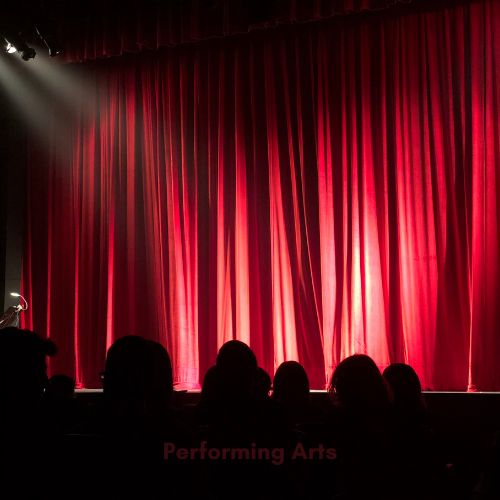
theatre stage curtains with an audience
Drama

The study of  drama enables pupils to develop a wide range of essential transferrable skills such as independence, time-management, confidence, communication, problem- solving, planning, organisation, critical thinking, analysis and evaluation. Studying this subject will enable you to become an effective decision-maker, researcher, leader and team player. In essence, you will develop a range of invaluable life skills beneficial to your continuing education and any future employment.

Thanks to the numerous practical, teamwork and theoretical skills developed by Drama the career paths available are great and varied. Former pupils have gone on to enjoy successful careers in various aspects of professional theatre including acting, directing, scriptwriting, stage management, lighting, make-up and hair design as well as in business management, law, human resources, teaching, journalism, advertising and media.

Year 7 – 9 Curriculum Outline

Drama at Key Stage 3 enables pupils to explore, develop and express ideas and concepts which will help them make sense of reality. As a life skill and a creative art form, Drama helps pupils develop their ability to use voice, movement, gesture and facial expression, in acting, mime, dance drama and improvisation. During the course of these three years, pupils learn how to express and manage their thoughts and feelings – shared and experienced – while working in a safe and controlled environment. The development of these skills encourages self-confidence and self-awareness. It promotes the development of the individual in a group context: roles and ideas are negotiated, problems solved and decisions made together. Lessons are entirely practical and pupils will focus on a range of skills including devising, directing, performing and evaluation.

GCSE Curriculum Outline

GCSE drama is a highly practical, engaging and creative course. It provides pupils with the opportunity to analyse live theatre performances, explore drama as a practical art form, and to work independently to create both scripted and devised drama performances. Pupils will learn the theory behind the practice of creating drama and will apply this theory to their own devising and performing. In addition to performing, devising and directing, pupils are able to present design skills for assessment.

Component 1: Devising Drama

Students explore a stimulus provided by the exam board. They will work in groups to create their own devised drama based on their exploration. In addition to the performance, students will be marked on an accompanying portfolio with evidence of the process and decisions made whilst creating and developing their performance.

Students can work as either performers or designers for this task.

Component 2: Presenting and Performing Texts

Students explore a text and perform two scenes to a Visiting Examiner.

Students can work as either performers or designers completing a written portfolio and a final performance showcase demonstrating their chosen skills in a live performance. Students will perform in or design for two performances from one text. The accompanying document will outline their intentions for and approach to the performance showcase.

Component 3: Performance and Response – Examination

Pupils study one performance text for written examination.

Section A of the examination will contain questions on the selected text. These questions assess students’ knowledge and understanding of how drama is developed and performed.

In Section B, students will be required to analyse and evaluate a live theatre performance they have seen using accurate subject-specific terminology.

Enrichment Opportunities / Field Trips

English and Drama – regular theatre visits

Annual School play

House Performing Arts Competition

Annual Musical

Drama club

Industry masterclasses

Stage Make-up

EAL

English word highlighted in green
EAL

Improving your level of English will not only be useful in itself, but also allows pupils to understand all of their subjects to a higher level.

Year 7 – 8 Curriculum Outline

EAL lessons take place in lieu of Modern Foreign Languages, where this is appropriate. All pupils are assessed on arrival, using the Common European Framework of Reference for language learning (CEFR) and work at a level appropriate for them. Pupils in year 7 and 8 primarily work on developing spoken communication, as well as broadening their range of grammar and vocabulary to support life and study at school

We prepare pupils in years 7 and 8 for the Trinity College London Graded Examinations in Spoken English (GESE)

Aim

Trinity’s Graded Examinations in Spoken English provide a reliable and valid scheme of assessment through which learners and teachers can measure progress and development, whether for educational and vocational purposes or as a leisure activity.

Framework

This series of progressively graded exams is designed for speakers of languages other than English and sets realistic objectives in listening to and speaking with English speakers. The 12 grades provide a continuous measure of linguistic competence and take the learner from absolute beginner (Grade 1) to full mastery (Grade 12).

A major benefit of a graded exam system is that it provides a motivational tool with which to encourage learners to develop and progress by acknowledging small steps. All learners make progress at different rates, and a graded system ensures that at every stage of their development there is an opportunity for them to mark that progress. There is a Graded Examination in Spoken English appropriate to all learners, whatever their level of ability in communicating in English. Pupils in years 7 to 8 at Tettenhall College usually prepare for examinations at the Elementary or Lower Intermediate stage (Grades 4-6, CEFR level A2-B1).

Year 9-11 & IGCSE Curriculum Outline

All pupils at Key Stage 4 are assessed on arrival, using the Common European Framework of Reference for language learning (CEFR) and work at a level appropriate for them. We prepare pupils in years 9-11 for the Trinity College London Integrated Skills in English (ISE) examinations, at CEFR levels A2-C1, as appropriate . Classes focus on developing their reading, writing, speaking and listening skills, as well as grammar, vocabulary and exam practice. Where appropriate, some Year 11 pupils also sit the Edexcel IGCSE in ESL. We aim for all Key Stage 4 pupils to progress at least one level in their language skills during a two-year period.

Trinity College London Integrated Skills in English (ISE) Examinations

An ISE qualification provides valuable evidence of pupils’ ability to communicate effectively in English.

Preparing for Trinity’s Integrated Skills in English (ISE) exams helps them develop the English language communication skills they need for the  future. The exams are also relevant for college, university and for employability purposes

Economics

Economics

Studying GCSE Economics provides a vital understanding of how individuals, businesses, and governments make choices regarding resource allocation in an ever-changing world. It develops critical thinking, analytical, and data-interpretation skills, preparing students for careers in law, finance, journalism, and politics, while explaining complex, real-world issues like inflation and unemployment. 

Year 1

Microeconomics

The market system
The economic problem
Economic assumptions
Demand, supply and market equilibrium
Elasticity
The mixed economy
Externalities

Macroeconomics

Government and the economy:
Macroeconomic objectives
Government policies

Year 2

Microeconomics

Business economics
Production
Productivity and division of labour
Business costs, revenues and profit
Business competition
The labour market
Government intervention

Macroeconomics

  • Relationships between objectives and policies
  • The global economy:
  • Globalisation
  • International trade
  • Exchange rates

The Pearson Edexcel International GCSE in Economics comprises two examinations. The Pearson Edexcel International GCSE in Economics is a linear qualification. All examinations must be taken in the terminal series at the end of the course of study.

External Assessment – 2 Examinations (1hr 30) consisting of the following:

Paper 1: Microeconomics
Paper 2: Macroeconomics

English

Paper with the word English written on it
English

At Tettenhall College, English lessons are designed to help learners explore communication, culture and creativity, to develop independent and critical thinking and to engage with the richness of our language and literary heritage.

In addition to developing the skills to read fluently and write effectively and accurately, pupils will engage with a wide variety of high-quality texts both literary and non-fiction, across a range of genres. They will develop the skills to analyse critically, synthesise and evaluate ideas and to structure convincing and detailed arguments.

Pupils will also develop a confident control of spoken Standard English and become skilled in the art of discussion, debate, independent thinking and evaluation.

In English lessons, pupils will develop a range of highly transferable key skills – skills that are vital to any further programme of study or field of work.

A Level English Literature is a very good passport to a number of different occupations, including journalism, law, managerial positions, advertising and media, performing arts and teaching, as well as to Higher and Further Education.

Year 7 – 9 Curriculum Outline

The key stage 3 English curriculum aims to promote high standards of language and literacy by equipping pupils with a strong command of the spoken and written word, and developing their love of literature through widespread reading for enjoyment. Throughout the key stage pupils develop skills in the main key areas of reading, writing, speaking and listening.

Reading

Pupils will develop the habit of reading widely and often, for both pleasure and information and learn how to read easily, fluently and with good understanding, while gaining an appreciation of our rich and varied literary heritage. They will acquire a wide vocabulary, an understanding of grammar and knowledge of linguistic conventions for reading, writing and spoken language.

Writing

Pupils will learn how to write clearly, accurately and coherently, adapting their language and style in and for a range of contexts, purposes and audiences.

Speaking and Listening

Pupils will become competent in the arts of speaking and listening, making formal presentations, demonstrating to others and participating in debate. They will confidently use discussion in order to learn and will develop key communication skills enabling them to elaborate and explain clearly their understanding and ideas.

GCSE Curriculum Outline

GCSE English Language enables pupils to explore communication, culture and creativity, to develop independent and critical thinking skills, and to engage with the richness of our language and literary heritage. Students are encouraged to read high-quality texts across a range of familiar genres and styles, to support them in acquiring a love of reading. They are also given the opportunity to experiment with their own writing in a range of contexts and styles.

English Language examination preparation

Pupils will develop their comprehension, language analysis, critical reading and comparative analysis skills. They will explore strategies for approaching extracts from unseen prose fiction. They will build on and extend existing creative writing skills and develop their ability to write for different audiences and purposes.

GCSE English Literature develops pupils’ ability to engage critically with and explore a variety of texts across the major genres, including modern texts and texts from different cultures, as well as classic literature. Underpinned by a ‘skills-based approach’, the emphasis is on building pupils’ confidence in developing and articulating a fresh, individual response to texts that is supported and justified.

English Literature examination preparation

Pupils will study range of literary texts including modern prose or drama, 19th century prose, themed poetry and Shakespeare.

Geography

Geography

Geography helps pupils develop communication and teamwork skills, as much of the work involves group projects. Pupils also develop research and analytical skills through activities such as lab work, fieldwork, and using IT, gaining critical abilities in collecting and identifying patterns in data.

Employers value the mix of technical and social skills that studying Geography develops, as they are highly transferable and useful across a wide range of jobs.

Geography is relevant to any career that involves the environment, planning, or collecting and interpreting data. Popular careers for pupils with Geography qualifications include town and transport planning, surveying, conservation, sustainability, waste and water management, environmental planning, tourism, and weather forecasting.

Geography also complements other subjects. Our pupils go on to study a variety of courses at university and pursue careers in law, journalism, teaching, languages, dentistry, business, design, engineering, earth science, art, sculpture, and, of course, Geography.

Year 7 – 9 Curriculum Outline

During Key Stage 3, pupils cover a wide range of topics designed to engage and challenge them, promoting curious and inspired minds. The Geography team encourages pupils to participate in project work and use ICT resources to develop their independent learning skills.

  • Year 7: Topics include What is Geography?, map skills, settlement, weather and climate, and rivers. Pupils also study weather and climate in the context of the UK, developing key geographical skills and a deeper understanding of human and physical issues.
  • Year 8: Pupils study coasts, urban areas, energy, food and water, climate change, and sustainability.
  • Year 9: Pupils develop new skills and an enquiring mind, studying earthquakes and volcanoes, development, ecosystems, and population and migration.

GCSE Curriculum Outline

Students are examined across three papers:

  • Paper 1 – Physical Geography
    Topics include rivers, coasts, weather and climate change, and ecosystems, biodiversity, and management.
  • Paper 2 – Human Geography
    Topics include changing cities, global development, and resource management, with a subtopic on energy.
  • Paper 3 – Geographical Investigations: Fieldwork and UK Challenges
    Pupils have the opportunity to attend a residential trip to collect data for both human and physical fieldwork investigations.

Enrichment Opportunities / Field Trips
The Geography department organises a range of field trips, both in the UK and abroad, to enrich pupils’ understanding of geographical diversity.

  • Day trips include visits to Carding mill Valley and Shrewsbury to explore issues such as flooding.
  • Sixth Form pupils have trips to the Dorset coastline to examine coastal erosion and to Birmingham to study the impacts of regeneration.

History

Picture of a building
History

It is difficult to overstate the importance of history in shaping our modern world. We live with the consequences of the past every day. Employers and universities value history as a highly worthwhile subject of study because it develops skills that can be applied in a wide range of situations.

History is an engaging and enjoyable way to develop analytical and communication skills. It provides an excellent foundation for a variety of careers, including advertising, archaeology, history, journalism, law, marketing, media, professional services, policing, politics, research, and teaching. Some of our pupils plan to study sciences, particularly medicine, at university and choose history because they recognise the importance of strong essay-writing skills at degree level. Our staff and pupils work hard to achieve consistently excellent results, and many students have gone on to study history at highly reputable universities.

Year 7 – 9 Curriculum Outline

  • Year 7: Pupils explore key turning points in medieval history, including England before 1066, the Norman invasion and the Battle of Hastings, Norman England, the Tudors, the Stuarts, and the English Civil War.
  • Year 8: Pupils study the Early Modern period, covering the slave trade, the British Empire, the Industrial Revolution, World War One, the suffragettes, and the interwar years, including the Treaty of Versailles.
  • Year 9: Pupils focus on the twentieth century, examining World War Two, the Holocaust, the American Civil Rights movement, the Cold War, and the Vietnam War.

GCSE Curriculum Outline

  • Topic 1: International Relations and the USA, 1919–1948
    This topic examines the changing nature of international relations after the First World War and the emergence of the United States as a global power. Pupils study the challenges of peace-making after 1919, the causes of international tension, and the reasons for cooperation and conflict between nations. They also explore the impact of political ideologies, economic pressures, and diplomacy on international stability, and the growing influence of the USA in world affairs. Pupils develop an understanding of how historians have interpreted international relations differently over time.
  • Topic 2: Power – Monarchy and Democracy in Britain, c.1000–2014
    This thematic study explores how power has been exercised and challenged in Britain over a long period. Pupils investigate the changing relationship between the monarchy, government, and the people, including key turning points such as the Magna Carta, the development of Parliament, civil conflicts, and the expansion of democracy. The topic examines how power has shifted over time, the role of protest and reform, and the extent to which Britain has become a democratic society.
  • Topic 3: The English Reformation, c.1520–c.1550 and Castles: Form and Function, c.1000–1750
    This unit combines a depth study and a thematic study.

    • The English Reformation focuses on religious and political change during the reigns of Henry VIII and Edward VI. Pupils examine the causes of the Reformation, the role of key individuals, and the impact of religious change on the Church, government, and everyday life.
    • Castles: Form and Function explores how castles were built, used, and adapted over time. Pupils study how castles reflected changes in warfare, defence, control, and status, and how their role evolved from military fortifications to symbols of power and authority.

Enrichment Opportunities / Field Trips

Key Stage 3 pupils often have the opportunity to participate in residential trips. In the past, pupils have travelled to France and Belgium to visit the World War One battlefields, and to Italy to explore Pompeii and the surrounding area.

GCSE pupils may visit the Cosford Cold War Museum, a local castle (typically Kenilworth), and a local English Civil War site.

Maths

Maths equations written on a blackboard
Maths

Mathematics is the science that deals with the logic of shape, quantity and arrangement; it helps us to understand the world around us, in everything we do. Mathematics is fundamental for everything in our daily lives, including mobile devices, architecture, art, money, engineering and even sports.

Mathematicians seek and use patterns to formulate conjectures and then endeavour to resolve truth or falsehood of these conjectures by mathematical proof. Mathematical reasoning can provide insight or predictions about nature and, often, abstract mathematical structures can be used as good models of real phenomena.

Mathematics is applicable to any kind of career that involves the environment, planning, or collecting and interpreting data. Popular careers for people with mathematics qualifications include: cryptographer, engineer, accountant, teacher, scientist, statistician, economist, architect, computer scientist, programmer, stockbroker.

Year 7 – 9 Curriculum Outline

During KS3 pupils will be challenged and stretched by consolidating skills learnt for KS2 mathematics but also interweaving new content. The level of challenge increases across the key stage, but topics of interest will be explored to a deeper level. Our pupils are encouraged to think deeply about the structure of the mathematics to achieve a more sophisticated understanding of what they are doing.

In Year 7, the topics that pupils cover include: analysing and displaying data, number skills, equations, functions and formulae, fractions, angles and shapes, decimals, multiplicative reasoning, perimeter, area and volume, sequences and graphs.

In Year 8, the topics that pupils cover include: factors and powers, working with powers, 2D shapes and 3D solids (including circles and Pythagoras’ theorem), real-life graphs, transformations, fractions, decimals and percentages, constructions and loci, probability, scale drawings and measurements, graphs.

In Year 9, the topics that pupils cover include: powers and roots, quadratics, inequalities, equations and formulae, collecting and analysing data, multiplicative reasoning, non-linear graphs, accuracy and measures, graphical solutions, trigonometry, mathematical reasoning.

GCSE Curriculum Outline

Pupils will be studying a range of topics that advance their learning from KS3. Pupils will have 4 hours of mathematics each week and will be set prep regularly. The course is divided into 19 units to cover all content from grade 9-1.

GCSE Specification

Year 10 • Unit 1: Number – including: arithmetic, HCF and LCM, fractional and negative indices, standard form and surds • Unit 2: Algebra – including: expanding and factorising, equations, formulae and sequences • Unit 3: Interpreting and representing data • Unit 4: Fractions, ratio and percentages • Unit 5: Angles and trigonometry • Unit 6: Graphs • Unit 7: Area and volume • Unit 8: Transformation and constructions • Unit 9: Equations and inequalities • Unit 10: Probability • Unit 11: Multiplicative reasoning • Unit 12: Similarity and congruence

Year 11 • Unit 13: More trigonometry • Unit 14: Further statistics • Unit 15: Equations and graphs • Unit 16: Circle Theorems • Unit 17: More algebra • Unit 18: Vectors and geometric proof • Unit 19 Proportion

Enrichment Opportunities / Field Trips

UMKT Maths Challenge

Pupils are encouraged to enter the UKMT individual Maths challenges. There are three levels of difficulty: senior challenge for Year 13 or below, intermediate challenge for Year 10 or below and junior challenge for Year 8 or below. Historically, pupils at Tettenhall College have achieved well and obtained scores that put them in the top 10% of the country. Some of our pupils have been invited to more difficult challenges.

The UMKT also offer team challenges and pupils can join a team of four elite mathematicians to challenge local schools. These competitions are offered for Year 13 or below and Year 8 or below.

National Cipher Challenge


Music

Music

A high-level musician will have the edge, whether for university applications, career interviews or as part of future employment. Studying music develops initiative, application, teamwork, creativity and confidence. Jobs are becoming more and more creative and music is a part of many industries. Indeed, it is one of the biggest industries, whether as a recording musician, live performer, arranger, composer, sound engineer, DJ/producer, critic/music journalist and many more fields, including education.

Year 7 – 9 Curriculum Outline

A practical curriculum that engages pupils with performance, composition and listening skills. Pupils enjoy a wide range of experiences from building confidence in solo keyboard performance, to playing rhythmically as part of a group and singing as a group too.  A wide range of musical styles are explored including World Fusions, Baroque Music and Film/Game Music. Increasing opportunities are being given for pupils to work with music technology.  Pupils are given chances to perform outside of the classroom and this is actively encouraged.  Pupils are also encouraged to bring their own instruments and have the opportunity to take individual lessons on an instrument or voice through our Music School programme.

GCSE Curriculum Outline

An engaging curriculum that incorporates solo and ensemble performing, composition and the appraising of set works ranging from the music of Beethoven, Queen and the film music of John Williams. Pupils will use their own instrumental or vocal skills in progressing their performance work. The composition portfolio is designed to foster creativity and extend existing skills.  Many opportunities to create their own music using technology are given and opportunities to perform in class and in public are available throughout the year.

Enrichment Opportunities / Field Trips

Musical opportunities at Tettenhall College are varied, rich and plentiful and all pupils are encouraged to get involved.  Pupils have enjoyed exciting opportunities to sing and perform rock, pop and gospel music with the Senior School Choir and Prep School Choir, in addition to participating together with the whole school in House-Singing Competitions.  Instrumentalists can be part of our vibrant Jazz Band, Rock/Pop Project or can have the space to form their own bands in the Music department.  Musical opportunities are inclusive and pupils have taken part in concerts both in school and out in the wider community.  Over a quarter of the school currently take weekly individual lessons in one of 12 different instruments offered as part of our Music School programme.

Pupils studying Music also enjoy visits to concerts at the Symphony Hall Birmingham, St Martins in the Fields in London, Theatre visits and workshops by visiting musicians.  The Choirs take part annually in the nationwide Music For Youth Festival and performance tours to mainland Europe are planned every other year.

MFL

different languages
MFL

The MFL department strives to ensure that language learning is a positive, fulfilling and enriching experience for all pupils. Our MFL specialists deliver French and Spanish lessons to pupils from Year 1 right up to Year 13. Our curriculum enables pupils to develop skills and linguistic competence within a range of common topic areas and to develop a lifelong love of languages.

Students with languages qualifications have a vast array of career opportunities open to them, ranging from work with well-known multinational companies to international organisations or charities. There are exciting opportunities – often involving travel abroad- in sectors such as finance/ banking, sales, manufacturing, community/social services, research/medicine, and transport/communication.

Studying a Modern Foreign Language opens doors to exciting careers in areas such as:

  • International relations
  • Media and journalism
  • The civil service and international agencies and embassies
  • International law
  • Interpreting and translating
  • International business management
  • The armed forces

The importance of languages cannot be downplayed in the current climate of extreme competition for university places and jobs. The modern of foreign languages teachers at TC strive to inspire our pupils to be enthusiastic, resilient and passionate linguists. To this end we offer an annual trip to a French or Spanish-speaking country, enabling and encouraging our Year 7 and Year 8 language-learners to fully immerse themselves in the languages and cultures being studied.

Year 7 – 9 Curriculum Outline

MFL Lessons prepare pupils effectively for communicating successfully with speakers of French and Spanish. We aim throughout the year 7-9 curriculum to begin key preparation for the rigorous GCSE exams, both in terms of content (extended and more challenging curriculum, with a focus on spontaneous speech in the target language) and developing exam skills.  We follow an EPI (Extensice Processing Instruction) approach, as set out by Dr Gianfranco Conti, in all of our KS2 and KS3 lessons, making full use of sentence builders and knowledge organisersActivities such as transcribing audio, translating texts, participating in roleplays and discussing photo cards are all included in the GCSE exam and therefore incorporated into our KS3 curriculum.

French:  Students follow a scheme of work that is based around the “Dynamo” and “Studio” coursebooks.  Topics studied include “Myself and My Family”; “School Life” and “My Home Area”; “Holidays”; “Sports and Leisure”; “Technology”; “Jobs and Ambitions for the Future”.

Spanish:  Students follow a scheme of work that is based around the Pearson “Viva” course.  Topics studied include “My Life”; “My Free Time”; “My School”; “My City”; “My Holidays”; “TV and Media” and “Let’s Eat”.

GCSE Curriculum Outline

GCSE AQA FRENCH / SPANISH

What will pupils be studying?

The AQA GCSE specification for French and Spanish is a linear two-year course with no controlled assessment.  The course aims to stimulate pupils’ cultural knowledge whilst developing their language skills, giving them the confidence to be able to communicate in a variety of contexts.

Teaching is organised around topics and the fours skills of listening, speaking, reading and writing. The topics to be studied are: “Me, my family and friends”, “Home, town, neighbourhood and region”, “my studies”, “Free time activities”, “Healthy eating”, “Life at school”, “Customs and festivals”, “Travel and tourism”, “Education post-16″, “Marriage and partnership”, “Technology in everyday life”, “Social media”, “Global issues”, “The environment”, “Poverty / homelessness” and “Jobs, career choices and ambition”.

How do pupils learn?

Pupils will develop their linguistic skills by means of a focus on listening and responding to different types of language, communicating in speech for a variety of purposes, reading and responding to different types of written language and communicating in writing. Pupils will engage in a variety of activities, including using interactive learning platforms, to support them in understanding and using a wide range of vocabulary and structures.

How are pupils assessed?

All assessments are based around the three themes of ‘Identity and culture’, ‘Local, national, international and global areas of interest’ and ‘current and future study and employment’.  The four key skill areas (listening, speaking, reading and writing) are assessed by final examinations at the end of the course.

Written examination: 1 hour (Foundation), 1 hour 15 minutes (Higher) worth 25% of grade

Speaking non-examination assessment: 7-9 minutes (Foundation), 10-12 minutes (Higher) worth 25% of grade

Reading examination: 45 minutes (Foundation), 1 hour (Higher) worth 25% of grade

Listening examination: 35 minutes (Foundation) 45 minutes (Higher) worth 25% of grade


Physical Education

Physical Education

Both curriculum and examination PE opens up the world of sport. Pupils are encouraged to immerse themselves in sports and PE with the chance to perform, coach, officiate and ultimately develop lifelong participation in physical activity. Sport and PE gives pupils skills for a modern world, by developing practical skills, such as communication, leadership, dealing with pressure, split second decision-making and analysing and evaluating performance. This complete grounding in the subject provides a fantastic base from which pupils can build upon when they move on to higher education, employment or further training.

A base in sport gives a multitude of career possibilities, such as professional athlete, sports psychology, sports coach/teacher/lecturer, sports marketing/media, fitness professional and physiotherapy.

Year 7 – 9 Curriculum Outline

The year 7 to 9 pupils are exposed to a multitude of sports and activities: – swimming, basketball, health related fitness, badminton, athletics, handball, gymnastics, outdoor education, volleyball, dance, tennis and squash. We use a multi-functional fitness test assessment, where pupils participate, throughout the year, in different fitness tests to monitor their progress in both skill and health related fitness components.

GCSE Curriculum Outline

Pupils will have 3 lessons per week. Year 10 is split into the following topics: – health, fitness and well-being, sport psychology, applied anatomy and physiology, physical training, and practical performance. The year 11 topics are movement analysis, socio-cultural influences, planning and executing a personal exercise programme whilst continuing with practical performance.

Enrichment Opportunities / Field Trips

A thriving sports fixture calendar with other independent and local schools enables our pupils to experience competition both in their own specialisations and in new sports. As part of the Independent Schools Association, we are able to give our best pupils access to regional and national events. We have recently represented the Midlands at the ISA National Swimming Competition and have won Midlands regional competitions in football and netball at the U14 age group. Other ISA successes include cricket, hockey, and national tennis. Alongside our access to ISA competitions, we also offer local fixtures and opportunities through the WASPS Partnership, where competitive fixtures are available for pupils from U9 to U18.

Religious Studies

Bible with the Holy cross
Religious Studies

Religious studies is not just for the religious. The aim of religious studies is to give everyone a good understanding of the world’s major religions, and how religion impacts on the world. Pupils also learn a little philosophy, a little ethics, and are encouraged to constantly question everything.

A GCSE in Religious Studies gives pupils important knowledge of the social and political impact of religion in modern society. It also helps develop skills in text interpretation, analysis, evaluation and debating skills.

Despite a common belief that careers in Religious Studies are limited to those of a spiritual or pastoral nature (e.g. Priest, Imam, Chaplain etc), a qualification in RS can provide a solid basis for a vast variety of different occupations. Knowledge of other cultures and world religious beliefs can be useful in many jobs where you are working with the public or communities.

Year 7 – 9 Curriculum Outline

Year 7:

Introduction to RS – an introduction to the subject of Religious Studies is, how it is studied, and a brief overview of the major world religions.

Christianity – An investigation of core Christian beliefs.

Making a difference – An understanding of how religion can inspire people to change the world through charity and selfless acts.

Giving life meaning – Learn about the ways in which religion can give depth and meaning to life.

Year 8:

Questions about God – A religious and philosophical exploration of God’s existence.

Islam – An investigation of core Muslim beliefs.

Religion, Identity and Society – An understanding of how religion can shape our identity, and how belief can conflict with society.

Ethics – A religious and philosophical exploration of how humans make moral choices.

Year 9:

In Year 9, the pupils start the GCSE RS course. Should they then decide to choose it for a GCSE subject in Year 10, they will have covered about a quarter of the content already.

Religion and relationships – Investigating how religious belief can impact the decisions that people make with love, sex and marriage.

Life and Death– Understanding religious beliefs regarding death, the afterlife and the creation of the universe.

Good and Evil – Examine the role that religion can play in crime and punishment, suffering and forgiveness.

Human Rights – The influence of religious belief on discrimination, prejudice and the fight for equal rights.

GCSE Curriculum Outline

Year 10

A continuation of the four topics studied in Year 9 (Religion and Relationships, Life and Death, Good and Evil and Human Rights
An in depth study of the teachings, beliefs and practices of Christianity

Year 11

Continuing the in depth study of the teachings, beliefs and practices of Christianity as well as learning about the beliefs and practices of Islam.

Enrichment Opportunities / Field Trips

During KS3 and KS4, pupils will visit some local places of worship. These may include (but are not limited to):

A Protestant and/or Catholic Church (Christianity)

A Mosque (Islam)

A Gurdwara (Sikhism)

A Mandir (Hinduism)

Visiting active places of worship is vital to enhance the pupil’s understanding of religion as a lived faith. It allows pupils to see how the religions they have learned about in class are actually practiced by worshipers in contemporary society.

Not only does this mean that pupils will develop a deeper understanding of the religions that they learn about, it also encourages them to engage with the subject on a more hands on level. It also encourages tolerance and respect for religions that may be very different from their own.

Science

Science

Science at GCSE level aims to develop pupils’ knowledge and understanding of scientific theories, and their ability to apply that knowledge, analyse and evaluate information in practical and everyday scenarios. It gives students good life skills, regardless of the path they follow.

Year 7 – 8 Curriculum Outline

During Key Stage 3 pupils cover a range of topics which will stretch and challenge them and provide an opportunity to learn about their own bodies and the world around them. We aim to promote inquisitive and curious minds, who enjoy planning practical investigations to answer their questions. As part of being an independent learner, the team encourages the pupils to get involved in project work, use the ICT resources to develop presentation skills and use their laboratory skills to pose their own hypothesis and test their theories.

In Year 7, the topics pupils cover include:

Biology: cells, healthy living and the respiratory system.

These topics are not necessarily covered in this order. Through these topics pupils will develop key fundamental biological theories and broaden their understanding of a range of human anatomical features with direct application to their own health and wellbeing

Chemistry: states of matter, changing state, diffusion, pressure, elements, atoms, compounds, chemical formulae, reactions, acids, alkalis and salts.

Physics: Forces, Water waves, sound, light, lenses, colour and space.

In Year 8, the topics pupils cover include:

Biology: exploring how their bodies interact with the outside world and gets everything it needs to function, before focusing on our interaction with plants and ecosystems.

Chemistry: metals and non-metals, groups and periods, mixtures, solutions, filtration, chromatography, metal reactions and extraction, ceramics, polymers, rocks and the carbon cycle.

Physics: static electricity, electricity and circuits, magnetism, energy, power, motion, pressure and moments.

Assessment – Science will be examined in end of year examinations in both year 7 and year 8. There will also be a number of end of unit tests which will form the basis of the end of learning cycle grade.

GCSE Curriculum Outline

In Year 9, pupils will study the three separate sciences, but they will be able to elect to study Combined Science in Years 10 and 11, which will give two GCSEs, or Triple Science, which gives three GCSEs. GCSE study in the sciences provides a foundation for understanding the material world. Scientific understanding is changing our lives and is vital to future prosperity.

Biology 1

Cells and control, genetics, natural selection and genetic modification, health, disease and the development of medicines.

Chemistry 1

Formulae, equations and hazards, atomic structure, the periodic table, ionic bonding, covalent bonding, types of substance, calculations involving masses, States of matter, Methods of separating and purifying substances, acids, obtaining and using metals, electrolytic processes, reversible reactions and equilibria.

Physics 1

Motion, forces and conservation of energy, waves, light and the electromagnetic spectrum, particle model, radioactivity

Biology 2

Plant structures and their functions, animal coordination, control and homeostasis, exchange and transport in animals and ecosystems.

Chemistry 2

Formulae, equations and hazards, overarching concepts in chemistry, atomic structure, the periodic table, ionic bonding, covalent bonding, types of substance, calculations involving masses, groups 1, 7 and 0, rates of reaction, fuels, topic heat energy changes.

Physics 2

Energy and forces doing work, forces and their effects, electricity and circuits, magnetism and the motor effect, electromagnetic induction, particle model, forces and matter.

Assessment Combined Science – Assessed at the end of Year 11 by 6 papers, each of 75 minutes. All topics are equally weighted, counting for 16.67 % of the final mark.

Assessment Separate Science – Assessed at the end of Year 11 by two papers per subject (six in total), each paper is 105 minutes and worth 50% of the grade for each subject.

Enrichment Opportunities / Field Trips

In year 7 and 8 there are a number of educational trips. In year 7 there is a trip to Chester zoo, to look at animal groups and during their visit the pupils have a lesson by the staff on animal classification. In year 8 or year 9 there is a trip to Birmingham NEC to the big bang science event which is a huge display on future science, with many interactive displays to capture the imagination of the pupils.